Titanium lighter sleeves and peanut lighters: fits and seals
Titanium lighter case machining: size the sleeve fit, pick an O-ring that survives lighter fluid, set squeeze and surface finish, and write a quotable RFQ.
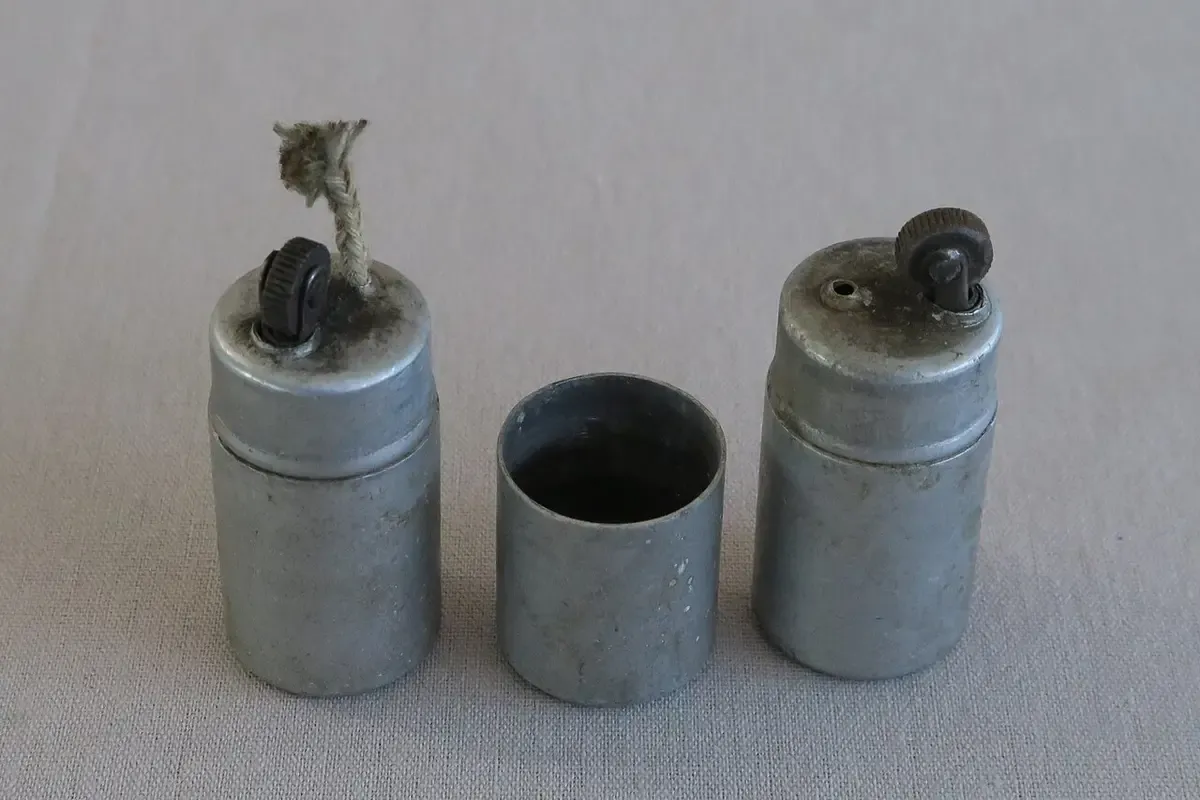
A titanium lighter case is a sleeve, an insert and a seal, and the seal is what a buyer notices first: the lighter either keeps its fuel for months or it is dry by the weekend. The sleeve and the cap are plain turned parts. The work is in the fit between the pieces and in the O-ring that closes the fuel space. This guide covers how a small liquid-fuel lighter is built, how to choose the O-ring material, which squeeze and surface finish numbers to put on the drawing, and what to write in the RFQ.
How a small liquid-fuel lighter is built
The classic liquid-fuel lighter burns light petroleum distillate, commonly called naphtha or lighter fluid. A cloth wick and fibre packing soak up the fuel so it does not slosh or leak, and a flint wheel strikes a small flint to light the wick. The lighter in the photo above is an old aluminium example: an outer sleeve slips over a body that carries the fuel, the wick and the wheel.
A modern titanium peanut lighter follows the same logic, split into three groups of parts:
- Sleeve (outer case). Turned from Grade 2 or Grade 5 titanium bar. It protects the insert and, on most designs, carries the cap thread.
- Insert or capsule. The part that holds the fuel, wick and wheel. It is usually a separate piece, either bought in or turned by the shop.
- Seal. An O-ring between cap and body. A permanent-match style lighter, as described in general references, uses a rubber O-ring on the fuel compartment to slow or stop evaporation. That is the same job the O-ring does here.
Titanium choices are covered in titanium Grade 2 vs Grade 5 for EDC parts. For a part that is mostly a tube with a thread, Grade 2 is easier to turn and anodizes to deeper colour. Grade 5 is stiffer and resists dents better.
The fit between sleeve and insert
Three fits decide whether the lighter feels precise or cheap.
- Sleeve to insert. The sleeve has to slide over the body without sticking, yet not rattle. Give a clearance range, not a nominal diameter. A few hundredths of a millimetre of diametral clearance feels firm. A tenth feels loose. Refer to the same approach as in tolerances and fits for knife scales: mark the one or two fits that matter and leave the rest on a general tolerance.
- Cap thread. A cap that threads onto the body needs a thread that engages smoothly for several turns before the O-ring starts to compress. Thread milling holds small titanium threads more reliably than tapping, see thread milling vs tapping small titanium threads.
- Titanium against brass. If the insert is brass, you avoid titanium running on titanium, which is the galling case covered in flashlight threads that do not gall. If both mating threads are titanium, specify a lubricant or a different material for one half.
Anodizing adds a few micrometres on a thread or a bore. If the part is coloured, state whether the fit dimensions apply before or after anodizing, as set out in Type II vs Type III anodizing for EDC parts.
Pick an O-ring that survives the fuel
The seal fails first when the rubber is wrong for the fluid. Standard references on O-ring materials say:
| Material | With fuels and mineral oils | Note |
|---|---|---|
| Nitrile (NBR, Buna-N) | Resistant to mineral oil and grease; poor with high-aromatic fuels | Low-cost default; check the grade |
| Fluoroelastomer (FKM, Viton) | Excellent resistance to fuels and mineral oils | Usual choice for fuel service |
| Silicone | Generally not resistant to fuels | Avoid for a fuel seal |
Based on the O-ring material notes in the Wikipedia article on O-rings. Treat them as a starting point. The fuel the brand’s customers will actually pour in, its aromatic content and the working temperature all move the answer, so ask the O-ring supplier for a compatibility statement against the named fuel.
Silicone is the trap. It is soft, easy to fit and cheap, and a lot of general-purpose O-ring kits are silicone, which is why it turns up on lighter prototypes and then swells. Put the O-ring material and hardness on the drawing, or buy the rings yourself and send them to the shop.
Squeeze, groove and surface finish
An O-ring seals by being compressed by a set fraction of its cross-section. Published guidance from a seal supplier gives:
- Face seal (O-ring squeezed against a flat): 20 to 30 percent squeeze.
- Static male/female (radial) seal: 18 to 25 percent.
- Installed stretch: 0 to 5 percent of the ring’s inner diameter, because stretch thins the cross-section.
- Groove fill: about 75 percent, leaving about 25 percent void so the rubber has room to swell and to widen under squeeze.
- Sealing surface: about 32 Ra (microinch) to seal liquid, which is roughly 0.8 micrometres. Rougher surfaces abrade the ring even in a static seal.
- Sharp corners: break them with a chamfer, so the ring is not cut as it goes on.
Worked example, using those squeeze percentages on a ring with a 1.5 mm cross-section: the compressed gap at a face seal is 1.5 x (1 - 0.30) to 1.5 x (1 - 0.20), which is 1.05 to 1.20 mm. For a radial static seal at 18 to 25 percent squeeze the gap is 1.13 to 1.23 mm. This is arithmetic from the supplier’s rule, not a dimension to copy blindly. Take the exact groove from the ring maker’s chart for the ring you buy, and see flashlight bodies: heat sinking, wall thickness and O-ring grooves for the same rules applied to a light.
The Ra number is not the whole story. The rubber has to fill the valleys in the metal, and it fills a smooth, rounded lay better than sharp tool marks that cut across the ring. Ask the shop to finish the sealing face with a lay that runs around the ring, and to deburr the groove edges.
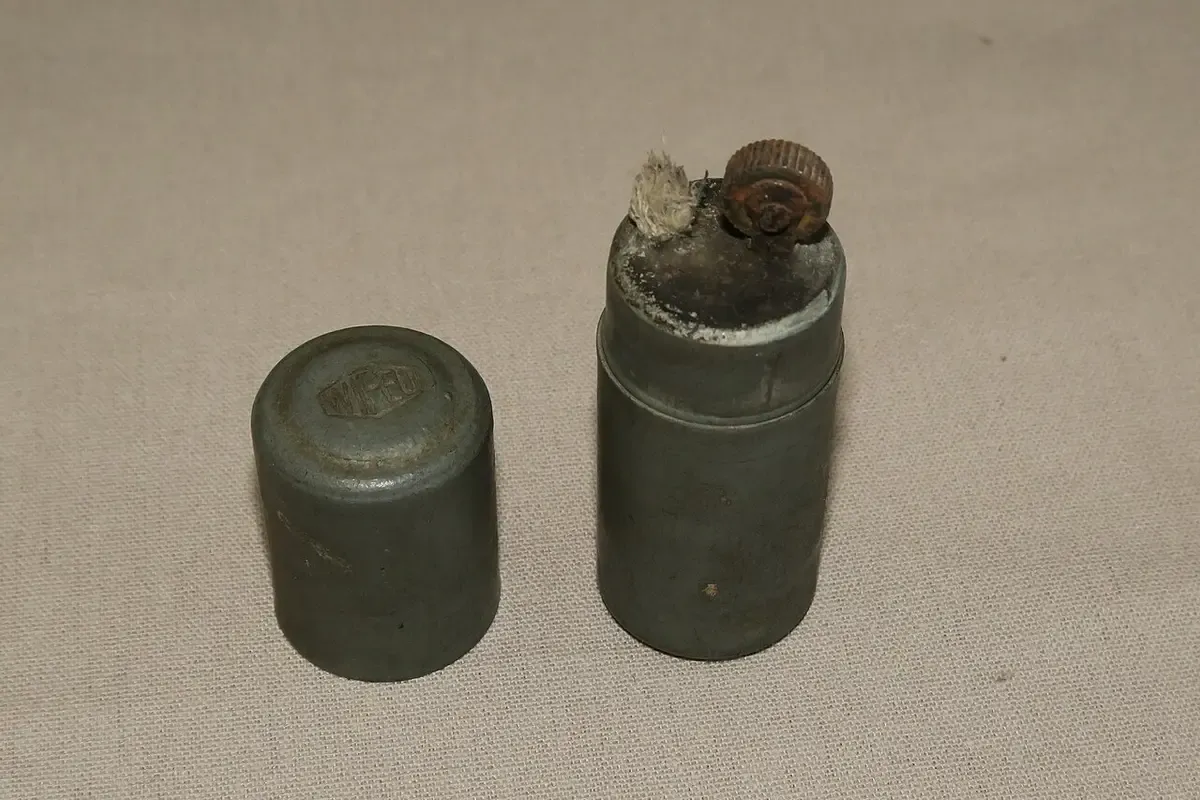
Proving the seal before the batch
No public acceptance test exists for a custom EDC lighter case, and the lighter itself falls under product-safety rules. ISO 9994 is the lighter safety standard, covering flame-producing products such as cigarette, cigar and pipe lighters, with requirements like flame height, resistance to high temperature and flame extinction. A brand selling in a regulated market should check what applies to its product before launch. The standard is paid, so read it through a national standards body and confirm with a test lab.
For the seal itself, a practical check is cheap. Fill a sample capsule, close it with the finished O-ring and cap, weigh it to 0.01 g, then weigh it again after several days at room temperature and after a warm cycle. A seal that holds shows no measurable loss. This is a suggested incoming check, not a published standard, so agree the limit with the shop in writing.
Ship the first article without fuel, and confirm with the carrier how lighters and fuel are classed before moving any filled units.
What to put in the RFQ
- Layout. Sleeve, cap and insert as separate parts, with the insert supplied by you or by the shop.
- Material. Titanium grade and condition for the sleeve and cap, and the insert material.
- Fits. Sleeve to insert clearance range, cap thread and engagement, with critical features separated as in how to write a CNC RFQ a shop can actually quote.
- Seal. O-ring size, material (FKM for fuel service) and hardness, groove dimensions and the sealing-face finish.
- Finish. Stonewash, bead blast or anodize, and whether fit dimensions are before or after finish.
- First article. Measured sample before the batch, as in first-article inspection and CMM reports on a small EDC batch, plus a fuel-hold check if you want one.
We are a sourcing desk, not a factory. We match your drawing to shops in the network that run small EDC batches and return itemised quotes. See the processes the network covers, then send the drawing and we reply within 24 business hours.
FAQ
What fuel does a peanut lighter use? Most small refillable lighters of this type burn light petroleum distillate sold as naphtha or lighter fluid, absorbed by a wick and packing. Confirm the fuel your brand will recommend, then choose the O-ring against that exact fluid.
Which O-ring material is right for a lighter? Fluoroelastomer (FKM, Viton) is the usual choice for fuel service because it resists fuels and mineral oils well. Nitrile can serve with some fuels but struggles with high-aromatic ones. Silicone is generally not resistant to fuels and should be avoided.
How much should an O-ring be compressed? Seal supplier guidance gives about 20 to 30 percent squeeze for a face seal and 18 to 25 percent for a static radial seal, with 0 to 5 percent installed stretch. Take the exact groove from the ring maker’s chart for your cross-section.
Can the shop turn the whole lighter, including the insert? Often the sleeve and cap are turned and the fuel insert is a bought-in part, because the wick, wheel and flint hardware are standard items. Say in the RFQ which parts you supply and which the shop makes, so the quote covers one scope.
Are lighters regulated? Yes. ISO 9994 sets safety requirements for cigarette, cigar and pipe lighters, and markets have their own rules. Check what applies where you sell, and test a finished sample with a lab, because the machined case alone does not make the lighter compliant.
Sources
- Wikipedia: Lighter (naphtha fuel, wick and packing, O-ring on permanent-match lighters)
- Wikipedia: Zippo (case, insert, wick, flint wheel, naphtha-type fuel)
- Wikipedia: O-ring (nitrile, FKM and silicone resistance to fuels)
- Marco Rubber: O-ring gland general design considerations (squeeze, stretch, fill, surface finish)
- BSI Knowledge: BS EN ISO 9994 Lighters, safety specification (scope)