Folding knife blade steels: 14C28N, S35VN, M390 and MagnaCut
Four steels cover most folding knife blade orders. What each is, typical hardness, how they behave in grinding and heat treatment and what that does to cost.
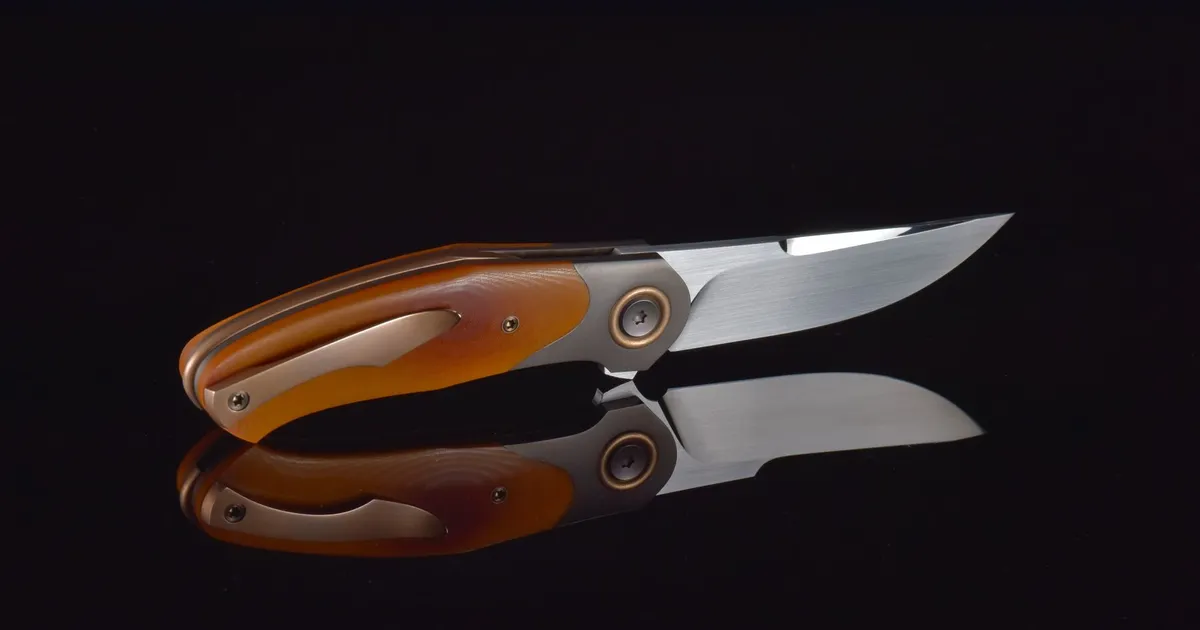
Pick the blade steel for a folding knife and you have also picked a supply chain, a heat treatment route, a grinding cost and a story for the customer. Four stainless steels cover most orders from small EDC brands: 14C28N, S35VN, M390 and MagnaCut. They are not interchangeable, and a shop quoting each one is solving a slightly different problem.
The four steels in plain terms
14C28N is a stainless steel from Sandvik, a fine-grained knife steel with about 14 percent chromium and added nitrogen. It is tough, takes a keen edge easily and resists corrosion well. It is not a high-wear steel, which is why it costs less and sharpens quickly. It is a common choice for entry and mid-price knives.
S35VN is a powder-metallurgy stainless steel from Crucible. It has vanadium and niobium carbides that give better wear resistance than 14C28N, and it was developed as a tougher alternative to its predecessor S30V. It has been a standard for premium folders for years.
M390 is a powder-metallurgy stainless steel from Böhler-Uddeholm with high chromium, vanadium and carbon. It offers strong wear resistance and good corrosion resistance and is common on high-end folders. It is harder to grind and polish than S35VN.
MagnaCut is a newer powder steel from Crucible, designed by metallurgist Larrin Thomas, which combines very good toughness with corrosion resistance and good wear resistance. It has become popular with makers who want a premium stainless without the usual trade-off in toughness.
Typical hardness
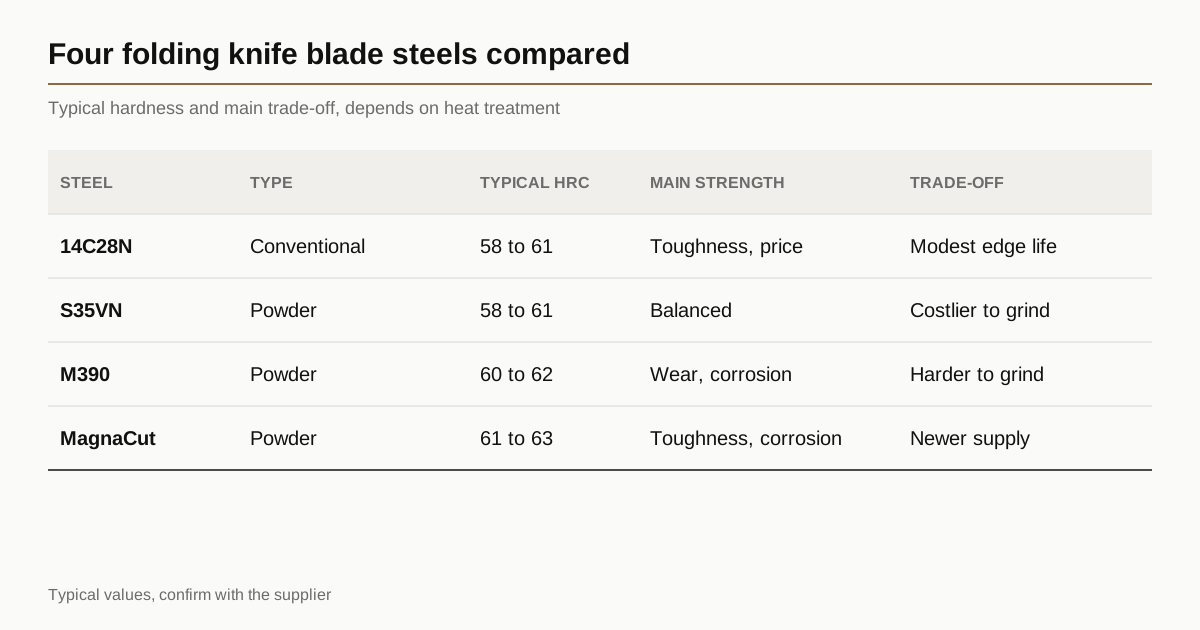
Final hardness depends on the heat treatment recipe, which belongs to the heat treater. Typical ranges seen on finished folders:
| Steel | Type | Typical hardness (HRC) | Main strengths | Main trade-offs |
|---|---|---|---|---|
| 14C28N | stainless, conventional | about 58 to 61 | toughness, easy sharpening, price | modest edge retention |
| S35VN | stainless, powder | about 58 to 61 | balanced wear and toughness | more costly to grind |
| M390 | stainless, powder | about 60 to 62 | wear and corrosion resistance | harder to grind, less tough |
| MagnaCut | stainless, powder | about 61 to 63 | toughness with corrosion resistance | newer, supply and price |
Treat these as typical. Ask the heat treater for a certificate with measured values from the actual lot.
What changes for the shop
Blank cutting
Blades are cut from flat bar or plate by laser, waterjet or wire EDM, usually in the annealed state. Thickness for folders is often around 2.5 to 4 mm. Powder steels cut the same way as other tool steels, but they are harder on wire and on any machining tool that touches them in the hardened state.
Grinding
Grinding is the main cost driver. Steels with many hard carbides, such as M390, wear belts faster and take more time to get a clean flat grind. 14C28N grinds quickly. MagnaCut is moderate, with fine carbides.
Heat treatment
All four are heat treated in a vacuum or controlled atmosphere furnace, quenched and tempered, and many makers add a deep cold or cryogenic step. The result depends on the protocol. A small shop usually sends blades to a specialist heat treater. See heat treatment for EDC tool steel for what to specify.
Warpage
Thin blades move in the quench. The shop plans for it with grinding allowance, flattening between tempers and a final surface grind. Blade steels with high alloy content are less prone to distortion in some respects, but plan for a small allowance in every case.
Choosing by customer and price
- Entry price, tough and easy to sharpen: 14C28N. Many buyers will not need more.
- Premium all-round folder: S35VN, or MagnaCut for a toughness story.
- Edge-retention story and a fine polish: M390, with attention to the cost of grinding.
- A knife used hard or in wet places: MagnaCut or M390, with a clear note on corrosion.
Steel is only one factor. Edge geometry, grind and heat treatment often decide cutting performance more than the label does. A well-treated 14C28N can beat a poorly treated premium steel in daily use.
Common mistakes when specifying blade steel
- Naming a steel without a hardness target. Two blades of the same steel can differ by several points of HRC.
- Asking for the hardest number. A blade at the top of the range may chip on a thin edge.
- Forgetting the grinding cost. The steel price is small next to hours on the grinder for a high-carbide steel.
- Changing steel after the sample is approved. The sample’s feel, polish and edge behaviour belong to that steel and that heat treatment.
- Skipping the certificate. Without it, a dispute over the steel cannot be settled.
Sourcing questions
- Source of the steel. Ask for a mill certificate with the heat number. Powder steels are sold by a limited number of producers and some makers sell under licence.
- Condition of the bar. Annealed, ground flat and within thickness tolerance.
- Minimum order. Some mills sell only in sheets or bar lengths, so a small run may need to buy a larger quantity.
- Lead time. Powder steel plate can take weeks.
- Substitutions. Do not accept a similar steel without written approval. Customers and reviewers check.
If your product literature names a steel, the certificate must back it. See quoting EDC jobs: what buyers compare for how to ask for it on a quote.
Other parts of the blade assembly
The blade steel interacts with the pivot washers, the lock and the handle material. Titanium frame locks work with any of these steels. Liner locks need the tang and lock face to be hard enough to resist wear. Coatings, discussed in PVD and DLC coatings, add a heat risk that varies by steel.
What to write in the RFQ
- Steel name and the supplier you accept
- Thickness, blade profile file and grind type
- Target hardness range and the measurement method
- Heat treatment: vacuum, cryo step and certificate
- Finish: satin, stonewash, bead blast or coating
- Quantity of blades and expected reorders
- Edge state: sharpened, or left unsharpened for the brand to finish
Send the drawing with the steel choice or ask for quotes in two steels side by side. The shops in the network will reply within 24 business hours.
Related references: Rockwell hardness testing of blades and clips and edge retention tests with CATRA and ISO 8442-5.
See also: MagnaCut for production folders, with the maker’s heat treatment and published test figures.
FAQ
Which of the four is best? None is best for every case. 14C28N suits low cost and toughness, M390 suits wear resistance, S35VN is balanced and MagnaCut stresses toughness with corrosion resistance.
Is a higher HRC always better? No. Higher hardness can mean more chipping. The right range depends on the steel and the blade geometry.
Can all four be heat treated by any shop? Powder steels need a competent vacuum heat treater with the right protocol. Ask for references or a hardness report.
Does the steel change the price a lot? Yes, through bar cost, grinding time and blade scrap. 14C28N is usually the cheapest of the four.
Do I need a mill certificate? If you name the steel in your marketing, yes. Keep it with the batch records.