PVD and DLC coatings on EDC parts: colour, wear and lead time
PVD and DLC coat blades, clips and titanium bodies in a few microns. What each coating looks like, how it wears, the heat risk for blades and the lead time.
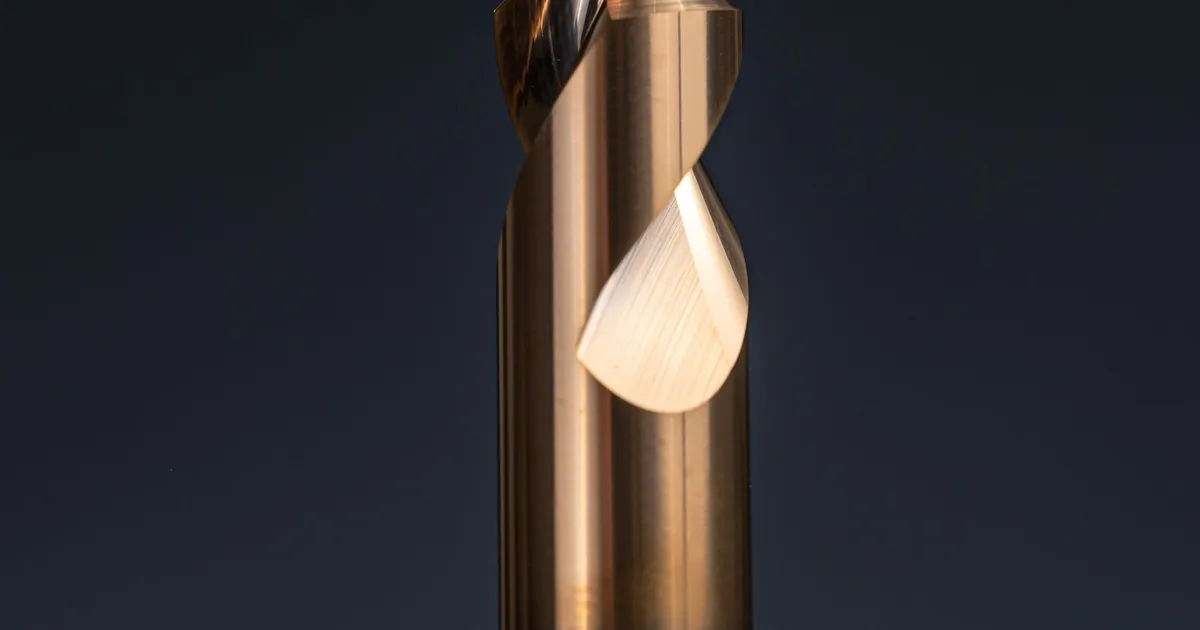
Black blades, gold clips and dark titanium bodies are often coated, not painted. PVD and DLC are thin ceramic or carbon films applied in a vacuum chamber, and they behave differently from anodizing or a sprayed coating. They look good on a drawing and can disappoint on a first run if three things are not agreed in advance: colour, substrate temperature and who prepares the surface.
What PVD and DLC actually are
PVD means physical vapour deposition. A solid source material such as titanium, chromium or zirconium is vaporised in a vacuum chamber, often with a reactive gas, and it condenses on the parts. The result is a hard film that is typically a few microns thick.
DLC means diamond-like carbon. It is a carbon-based film deposited by a related vacuum process. It is usually black or dark grey, has a low friction and wears slowly on typical pocket use.
Both coatings are thin enough to follow the surface of the part exactly. That is good for keeping dimensions but it means the coating does not hide anything. A scratch, tool mark or poor polish in the base shows through.
Common coatings and colours
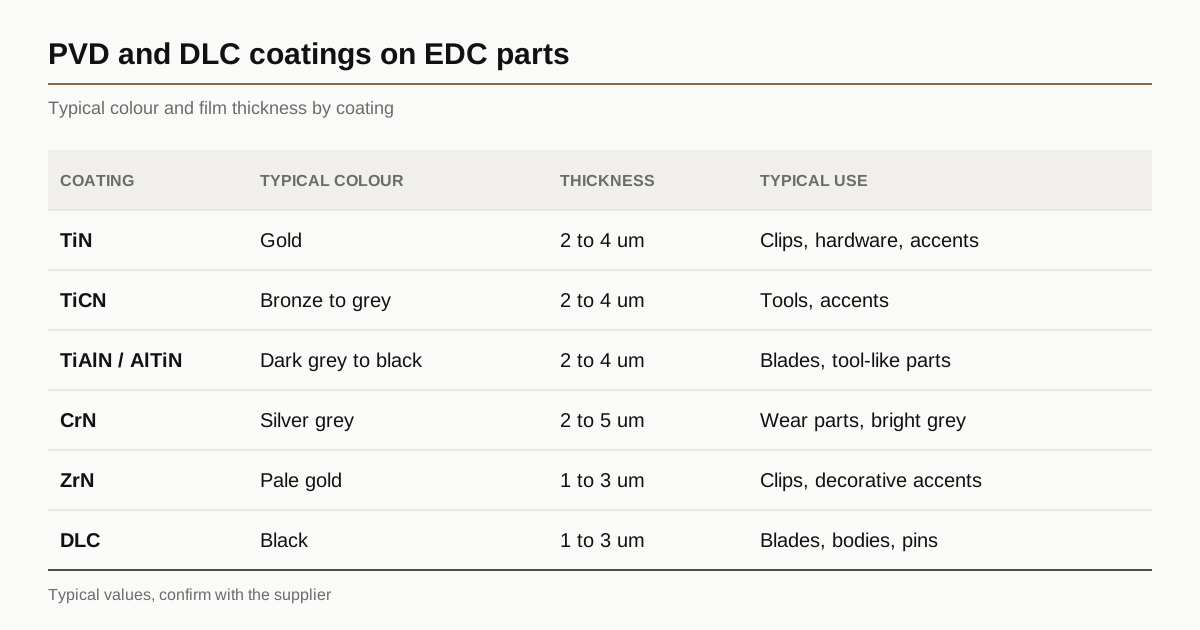
| Coating | Typical colour | Typical thickness | Typical use |
|---|---|---|---|
| TiN | gold | 2 to 4 µm | clips, hardware, accents |
| TiCN | bronze to grey | 2 to 4 µm | tools, accents |
| TiAlN or AlTiN | dark grey to black | 2 to 4 µm | blades, tool-like parts |
| CrN | silver grey | 2 to 5 µm | wear parts, bright grey look |
| ZrN | pale gold | 1 to 3 µm | clips, decorative accents |
| DLC | black | 1 to 3 µm | blades, bodies, pins |
Treat the thickness and colour as typical. Every coater has its own recipe, and colour varies with the batch and the base material. Ask for a sample plate if the colour matters to your brand.
The heat risk for blades
Vacuum coating takes place at an elevated temperature. Process temperatures differ by coating and by coater. They are often somewhere between about 150 and 450 degrees Celsius. A blade that was tempered below that range can soften in the chamber.
Steel with a high tempering temperature, such as many powder steels, copes with a wider range. Low-temperature tempers, used for some stainless grades, can lose hardness. Ask the coater for the actual process temperature and compare it with the temper of the steel. Heat treatment for EDC tool steel explains tempering in more detail.
If the blade is coated, always measure hardness on a sample after coating, not only before.
Titanium, aluminium and stainless
- Titanium. Takes PVD and DLC well. It can also be anodized, so the choice is a design one: anodizing gives colour, PVD gives a harder, metallic-looking finish.
- Stainless steel. The classic substrate for PVD. Surface finish and cleanliness decide adhesion.
- Aluminium. Possible, but the substrate is soft and the coating can crack if the part is dented. Anodizing is the usual choice for aluminium.
- Brass and copper. Usually need a nickel or similar underlayer. Ask the coater first.
Surface preparation decides the result
Coating is not a repair. It records the surface it is applied to. Agree who prepares the surface:
- Polish level. A bead-blasted surface gives a matte coating. A fine polish gives a mirror coating.
- Cleaning. Oil from machining and handling prevents adhesion. The coater cleans the parts, but heavy burrs or machining fluid residue can still cause trouble.
- Burrs and edges. Sharp edges attract coating that can chip. A small edge break is better.
- Threads and holes. Threaded holes and bearing surfaces are usually masked or machined after coating, because a micron-scale film changes the thread fit.
Coating over anodizing is not normal practice. Pick one or the other for a given surface.
How coatings wear
PVD and DLC wear most where the part rubs against other metal: pocket clips, edges, pivot washers and screw heads. A black DLC blade can show silver at the edge after sharpening, because sharpening removes the coating there. Buyers should be told this so that the first sharpening is not a surprise.
Compared with painted or ceramic-polymer coatings, PVD and DLC are thinner, harder and less forgiving of impact. Compared with anodizing, they do not rely on the base metal for colour.
Lead time and minimums
Coaters run in batches. A chamber load can take a few hours, and many coaters schedule loads by colour and by coating type.
- Time in the coater. Often several working days from receipt of parts to shipment, longer if the colour is not in the current schedule.
- Batch minimums. There is often a minimum charge per run. For small batches it can dominate the cost per part.
- Racking. Parts are mounted on fixtures. Complex shapes with deep blind holes may need custom racks.
- Shipping. If the coater is in a different city from the machine shop, add transport days each way.
A realistic plan allows one to two weeks after machining for coating and return. See stonewash, bead blast and anodize for the finishing steps that come before.
PVD against the other options
For a buyer choosing a finish, a short comparison helps. Anodizing suits titanium and aluminium and gives the widest colour range at the lowest price. Stonewash and bead blast are mechanical and cost almost nothing but give no extra hardness. A sprayed ceramic-polymer coating is thicker and easier to repair at home but looks like a paint. PVD and DLC sit at the top of the price range for small batches, and the reason to pick them is a hard metallic surface and a look that anodizing cannot copy. If the part will be sold under a premium label, a coated sample is worth the cost.
What to write in the RFQ
- Base material and, for steel, the tempering temperature
- Coating type and colour, with a reference sample if you have one
- Surface condition before coating: bead blast, polish or as-machined
- Areas to mask, such as threads, bores and mating faces
- Thickness range allowed on fits
- Number of parts per batch and expected reorders
Send the drawing with those lines and the shops in the network will reply within 24 business hours with a route that includes the coater.
FAQ
Is DLC harder than PVD? DLC is a type of coating made by a related process. Hardness varies with the specific film, so ask the coater for a typical value for the recipe.
Will a coated blade stay sharp longer? The coating adds surface hardness, but edge retention depends mainly on the steel and heat treatment. The coating at the edge wears off quickly in use.
Can I recoat a worn part? Usually the old coating must be stripped first and the part may need to be repolished. Ask the coater whether stripping is possible.
Does coating change dimensions? By a few microns per side. That is small, but it matters on close sliding fits and on threads.
Can I get a custom colour? Colours are limited by the coating chemistry. Black, grey and gold tones are common, and some coaters offer blue, purple or rose with an extra charge and a minimum batch.