Zirconium for EDC: machining, black oxide and what it costs
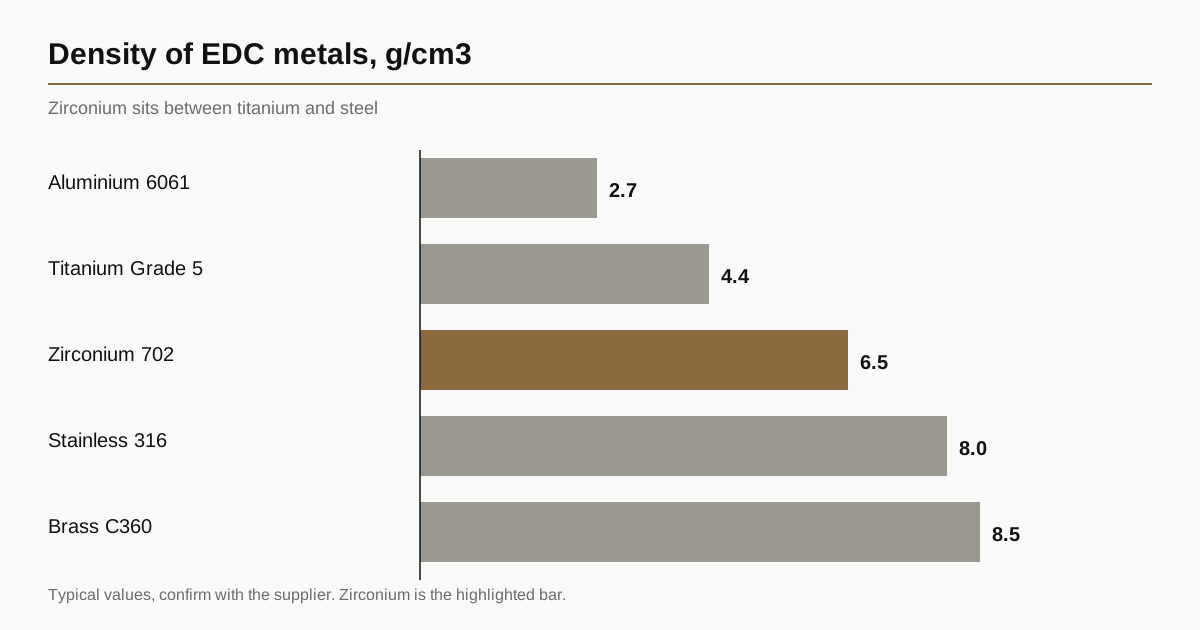
Zirconium sits between titanium and steel in weight, machines like a gummy titanium and takes a black oxide skin. What to expect in cost, chip safety and finish.
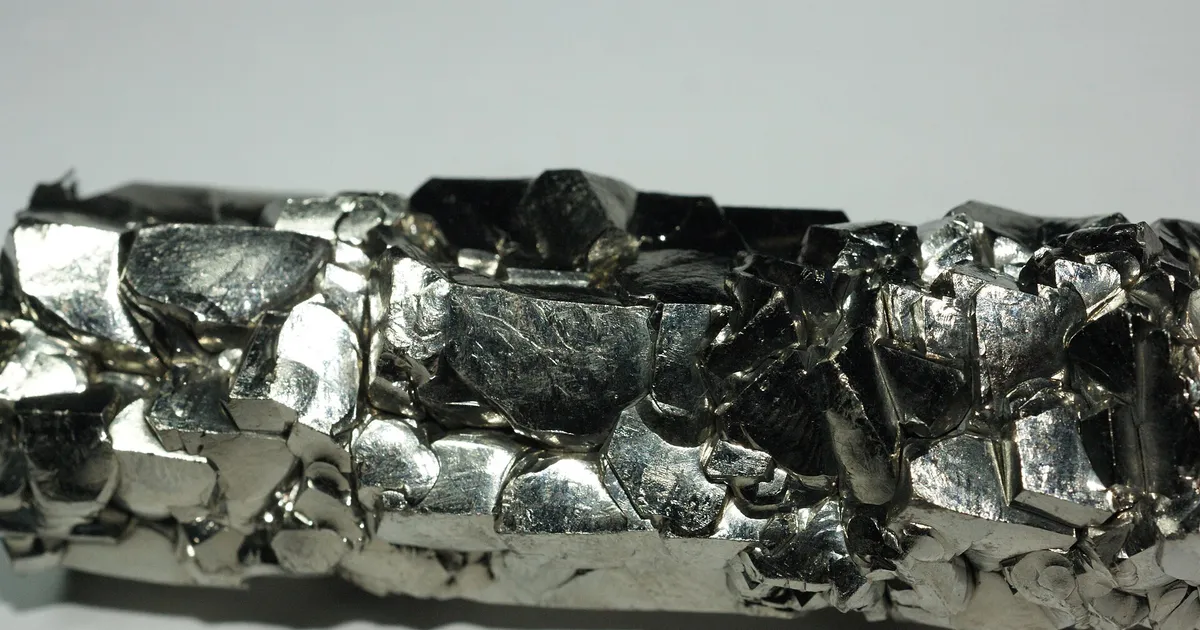
Zirconium is the quiet alternative to titanium for knife handles, pen bodies and fidget tools. It is a little heavier, quite strong for its weight and takes a deep black surface by heating alone. It also cuts differently from titanium and costs more, so it pays to know what you are signing up for.
What zirconium is in this context
The grade used for EDC is usually commercial zirconium, often sold as grade 702 (UNS R60702) or the niobium alloy 705. It is sold as bar, plate and sheet by specialty mills. It is not the same material as the zirconia ceramic used in some beads and bearings.
Zirconium is notable for three properties:
- Density in the middle. Roughly 6.5 g/cm³, against about 4.5 for titanium and about 7.8 for steel. A zirconium handle feels solid but not heavy.
- Corrosion resistance. Very good in many chemicals. For EDC this means it does not rust or stain.
- Non-magnetic. Useful for tools that must stay clear of magnets and sensors.
Strength of grade 702 is in the range of commercially pure titanium, below Grade 5 titanium. It is not the material for a thin lockbar under heavy load. It is a good choice for scales, pen barrels, beads and handles where weight and feel matter more than peak strength.
Machining notes
Zirconium machines in a way that surprises people used to Grade 5 titanium. It is not hard to cut but it is gummy, it galls and it work-hardens. The shops in the network treat it like a cleaner, more sticky titanium.
Typical practice includes:
- Sharp carbide tools with a polished edge
- Positive cutting geometry and steady feed so the tool never rubs
- Flood coolant at all times
- Moderate surface speeds, in the same range as commercially pure titanium
- Frequent tool changes to avoid a dulling edge
Fine chips are a fire hazard
This is the point that matters most. Zirconium chips and fines, especially fine dust from grinding or a dry cut, can ignite. Zirconium fires are metal fires and do not respond to water in the usual way. Careful shops keep coolant flowing, avoid dry cutting and fine abrasive operations, clean up swarf regularly and store it under cover or wet, and keep an extinguisher rated for metal fires nearby. Ask any shop quoting zirconium how it handles chips. A short, specific answer is a good sign. A blank look is a reason to choose another shop.
Black oxide on zirconium
The deep black seen on “black zirconium” is an oxide layer grown by heating the metal in air. Under controlled conditions the surface turns through straw, bronze and blue shades into black as the oxide thickens. The layer is thin, typically a few microns, and it is harder than the base metal.
Points to know:
- It is a thermal treatment. The parts go into a furnace at a few hundred degrees Celsius for a set time. The exact recipe belongs to the shop, so ask for it.
- Colour is uniform only with control. Temperature variation across the furnace produces patches.
- It changes dimensions by a few microns. Fine sliding fits and threads should be checked after oxidation.
- It can scratch through. A deep scratch exposes the metal underneath, which looks grey. Treat the black as a surface skin.
- It is not paint. There is no coating to flake off, but there is also no way to touch up a scratch.
Black oxide is done after final machining and deburring. For other finishes such as bead blast or stonewash, see finishes for EDC parts.
Cost
Zirconium costs more than titanium for several reasons: lower production volume, fewer suppliers and more careful handling. Mills may have minimum order lengths, and small diameters can take weeks. The part price rises further because machining is slower and tool wear is real.
| Material | Density g/cm³ | Relative material cost | Relative machining time | Typical finish |
|---|---|---|---|---|
| Zirconium 702 | about 6.5 | high | high | black oxide, bead blast |
| Titanium Grade 5 | about 4.4 | medium | high | anodize, bead blast, PVD |
| Titanium Grade 2 | about 4.5 | medium | medium to high | anodize, bead blast |
| Stainless 316 | about 8.0 | low | medium | polish, bead blast |
Treat the cost and time columns as relative. Ask for a quote with a material cost line and a machining line so you can see where the money goes. Titanium Grade 2 vs Grade 5 gives the titanium side of the comparison.
Supply and certificates
Request a mill certificate that states the grade and the chemistry. Commercial zirconium contains some hafnium as a natural companion element, and the certificate shows it. Do not accept “zirconium” without a grade, because suppliers sometimes sell alloys that behave differently.
If the part will be sold as zirconium, keep the certificate with the batch record. It protects the brand if a customer asks.
When zirconium makes sense
- Premium knife scales and handles where a dark, hard-looking surface is the selling point
- Pen barrels with a weighty feel
- Fidget sliders and spinners where mass matters
- Limited editions where the story of the material adds value
- Brands that want a black metal without a coating that can chip
It makes less sense for budget parts, for thin structural components and for any design that has already been optimised for aluminium or Grade 5.
What to write in the RFQ
- Grade, for example 702, and a request for the mill certificate
- Finish: black oxide, bead blast or both, and the colour tolerance
- Tolerance on fits that will change after oxidation
- Expected batch size and reorders, because stock length affects price
- Chip handling and coolant requirements, so you know the shop has a plan
- Packing and cosmetic standard for black surfaces
Because supply is thinner than for titanium, start the conversation early. Send the drawing and the shops in the network will reply within 24 business hours.
FAQ
Is zirconium stronger than titanium? Grade 702 is similar to commercially pure titanium and weaker than Grade 5 titanium. It is not a substitute where peak strength matters.
Can I get black zirconium without a heat treatment? The common black is an oxide grown by heating. Coatings such as PVD can also give a black look, but they are a different surface.
Is zirconium safe to machine? Yes, with the right practice. The main hazard is fine chips and dust. Flood coolant and good housekeeping reduce the risk.
Does zirconium cause an allergic reaction like nickel? It is generally regarded as biocompatible and is used in medical implants in some forms. For a skin-contact product, ask for a material declaration if a customer needs it.
Why is zirconium so much dearer than titanium? Smaller market, fewer mills and harder processing. Material price is usually the biggest part of the quote.