Landed cost of CNC EDC parts: price, freight and duty
The piece price is not what the parts cost you. How to build landed cost for CNC EDC parts: Incoterms, customs value, duty by HTS line, fees and the 2026 additions.
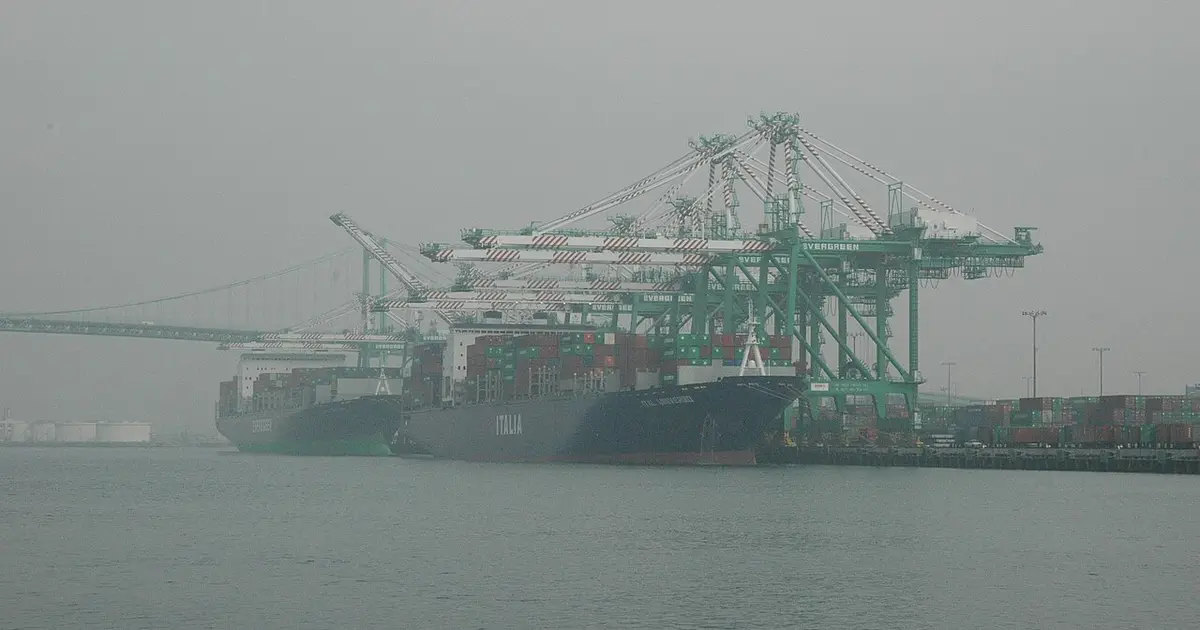
The landed cost of a CNC EDC part is the quoted piece price plus everything that happens between the shop’s door and your warehouse: packing, export clearance, freight, insurance, import duty, customs fees, broker charges and delivery. For small, high-value metal parts the duty and fee lines are often larger than the freight, and in 2026 they moved. This guide builds the number line by line, using US rules because most EDC brands import into the United States.
Start with the delivery term
The price you are quoted means different things depending on the Incoterms 2020 term next to it. The common ones for EDC batches:
| Term | Export clearance | Main freight | Import clearance, duty, taxes | Risk passes |
|---|---|---|---|---|
| EXW | Buyer | Buyer arranges collection | Buyer | At the seller’s premises |
| FCA | Seller | Buyer nominates the carrier | Buyer | At the named place, for example when loaded on your carrier |
| DAP | Seller | Seller, to the named destination | Buyer, including duty and taxes | At the named destination, on the arriving vehicle |
| DDP | Seller | Seller, to the named place | Seller pays duty and taxes | At delivery at the named place |
The International Chamber of Commerce presents Incoterms 2020 as the current edition. Two quotes are only comparable if they use the same term: an EXW price and a DAP price for the same part are a different amount of your money. Ask every shop to quote the same term, and for a first order ask for both FCA and DAP so the freight line is visible.
The lines in a landed-cost sheet
- Piece price and tooling. From the quote. If you supply fixtures, gauges or moulds to the shop free or at reduced cost, US law adds their value to the dutiable value as an “assist”.
- Packing and origin charges. Cartons, protective packing for finished surfaces, export documents, local trucking to the airport or port.
- International freight and insurance. Your forwarder’s quote, by actual weight and volume. EDC parts are small and dense, so air express is normal; compare it to consolidated sea freight only for large lots.
- Customs value. The value duty is charged on, covered below.
- Duty. The general rate for the HTS line, plus any additional tariff.
- Customs fees. Merchandise processing fee and, for cargo through a port, harbor maintenance fee.
- Broker and bond. The broker’s entry fee and, if you import often, a continuous bond.
- Delivery to you, and your own payment and currency costs.
Customs value is not the price you pay for delivery
In the US the dutiable “transaction value” excludes the costs of international transportation and insurance, as the statute defines the price actually paid or payable “exclusive of” those charges. That is why customs invoices should show freight as a separate line when it is included in the price, and why a DAP quote cannot simply be used as the customs value. The reverse also applies: anything you provide to the shop and do not pay for, such as tooling, dies, moulds and similar items used in the production, is an assist and is added. Fixtures you pay the shop to make are part of the price. Fixtures you supply to the shop without paying for them are an assist.
Whether a given freight deduction is accepted depends on documentation, so keep the commercial invoice, the freight invoice and the bill of lading consistent.
Duty depends on the HTS line, and the line is the importer’s call
The general (column 1) rates below are from the US International Trade Commission’s HTS database, retrieved October 2026. They show how widely rates differ across the products an EDC brand might import. Which line your part belongs in is decided by your customs broker, not by the shop and not by this article.
| Product | HTS line | General rate |
|---|---|---|
| Knives with other than fixed blades, including parts (folding knives) | 8211.93.00 | 3 cents each + 5.4% |
| Handles of base metal, other | 8211.95.90 | 3 cents each + 5.4% |
| Parts of ballpoint and fountain pens (not balls) | 9608.99.40 | Free |
| Ballpoint pens, complete | 9608.10.00 | 0.8 cents each + 5.4% |
| Parts of flashlights | 8513.90.20 | 12.5% |
| Articles of titanium (not elsewhere specified) | 8108.90.30 | 5.5% |
A titanium knife scale, a pen barrel and a flashlight body can therefore pay 5.4%, 0% and 12.5% before any additional tariff. Classification also has to reflect what is imported: a loose scale, a pen component and a finished assembled product do not necessarily fall in the same line.
The 2026 additions that now sit on top
Two changes since 2025 affect almost every EDC import:
- Additional Section 301 duty. For Vietnam, CBP’s July 2026 filing guidance sets an additional 12.5% under heading 9903.05.84 for goods entered on or after 12:01 a.m. Eastern on July 24, 2026, with listed exceptions. Articles covered by Section 232 metals duties are excluded from the Section 301 heading. Rates, exceptions and the status of origin-country negotiations change, so read the 2026 US tariff position for Vietnam-made EDC parts and confirm with a broker before you price a launch.
- No more duty-free small parcels. CBP suspended the de minimis exemption indefinitely for all modes except postal in June 2026 and put the postal channel on a new informal entry process. Shipments of $800 or less now need informal or formal entry, so a sample parcel is no longer duty-free and may carry broker fees.
Fees
CBP’s user fee table lists the merchandise processing fee for formal entries at 0.3464% of value with a $33.58 minimum and a $651.50 maximum, plus a $4.03 manual surcharge where it applies, and a separate schedule of flat fees for informal entries. The harbor maintenance fee is 0.125% of value for imports; it relates to cargo using ports, so it normally does not appear on an air shipment. CBP adjusts the dollar limits each October, so confirm the current figures with the broker.
A worked example
Illustrative numbers only, to show the arithmetic. Say a shipment of 200 titanium folding-knife scales is invoiced at $40 each, so the customs value is $8,000, and the broker confirms line 8211.93.00 with the additional 12.5% applying.
| Line | Basis | Amount |
|---|---|---|
| Goods | 200 x $40 | $8,000.00 |
| Duty, cents-based part | 200 x $0.03 | $6.00 |
| Duty, ad valorem | 5.4% of $8,000 | $432.00 |
| Additional 12.5% duty | 12.5% of $8,000 | $1,000.00 |
| Merchandise processing fee | 0.3464% is $27.71, so the $33.58 minimum applies | $33.58 |
| Duty and fees total | $1,471.58 |
That is about 18.4% of the goods value before freight, broker and delivery. If the same $8,000 were pen components in 9608.99.40, the figure would be the additional duty plus the fee, about $1,033.58 or 12.9%. If a part falls under Section 232 instead, the additional 12.5% line is replaced by a different one. Landed cost per piece is then:
(goods + freight + insurance + duty + fees + broker + delivery) divided by pieces
Run it for each backer region, then add your own payment costs.
Making the number reliable
- Ask each shop for the HTS line it expects, the country of origin and the material origin on the commercial invoice.
- Ask your broker to confirm classification and any additional-duty headings before you set a retail price.
- Quote prices to customers with a line you can change if a rate changes before the goods enter.
- For anything other than US imports, use the destination’s official tariff database; the structure is the same but the rates, tax and thresholds differ. The EU, UK and Japanese lines are in import duty on EDC parts from Vietnam: EU, UK, Japan and Korea.
The importer of record and the shipping options are in our guide to importing EDC parts from Vietnam.
We are a sourcing desk, not a factory. We quote the same drawing from several shops in the network on the same delivery term, so the landed-cost sheet starts from like-for-like prices. Send the drawing and tell us which term you want; we reply within 24 business hours. Related reading: what buyers compare in an EDC quote and sourcing EDC parts from Vietnam vs China.
FAQ
What is landed cost? Landed cost is the total cost of getting a part to your door: piece price, packing, freight, insurance, import duty and additional tariffs, customs fees, broker charges and delivery. Divide the total by the number of pieces to get a per-piece landed cost you can price against.
Is freight included in the value customs charges duty on? In the US, the dutiable transaction value excludes international freight and insurance, but you must be able to show them separately. Anything you supply to the shop free or at reduced cost, such as tooling or moulds, is added to the value as an assist.
Do small sample parcels still enter duty-free? Not at present. CBP suspended the $800 de minimis exemption indefinitely in June 2026, so low-value shipments need informal or formal entry and pay applicable duties, taxes and fees. Check the current status with your carrier or broker before you ship.
Which Incoterm should I ask for on the first order? Ask for FCA and DAP quotes for the same parts. FCA shows the price at the shop’s door so you can compare freight yourself. DAP gives a delivered price but leaves import clearance and duty with you. Avoid comparing an EXW price with a DAP price.
Who decides which HTS line a knife scale or pen barrel belongs in? The importer of record is responsible for classification, normally with a licensed customs broker. The shop’s suggestion is useful input but not a ruling. For a recurring product you can ask CBP for a binding ruling.
Sources
- International Chamber of Commerce: Incoterms 2020
- Wikipedia: Incoterms (allocation of costs by term)
- 19 U.S.C. 1401a: Value (transaction value, assists)
- U.S. International Trade Commission: Harmonized Tariff Schedule
- U.S. CBP: User fee table
- U.S. CBP CSMS 69326983: Section 301 forced labor import duties (guidance)
- BDO: CBP suspends de minimis exemption (June 2026)
- Wikimedia Commons: Evergreen San Pedro terminal (photo, CC BY-SA 2.0)
